Στην βιολογία, το περιβάλλον μπορεί να καθοριστεί σαν ενα σύνολο κλιματικών, βιοτικών, κοινωνικών και εδαφικών παραγόντων που δρουν σε έναν οργανισμό και καθορίζουν την ανάπτυξη και την επιβίωση του. Έτσι, περιλαμβάνει οτιδήποτε μπορεί να επηρεάσει άμεσα τον μεταβολισμό ή τη συμπεριφορά των ζωντανών οργανισμών ή ειδών, όπως το φως, ο αέρας, το νερό, το έδαφος και άλλοι παράγοντες. Δείτε επίσης το άρθρο για το φυσικό περιβάλλον και τη φυσική επιλογή.
Στην αρχιτεκτονική, την εργονομία και την ασφάλεια στην εργασία, περιβάλλον είναι το σύνολο των χαρακτηριστικών ενός δωματίου ή κτιρίου που επηρεάζουν την ποιότητα ζωής και την αποδοτικότητα, περιλαμβανομένων των διαστάσεων και της διαρρύθμισης των χώρων διαβίωσης και της επίπλωσης, του φωτισμού, του αερισμού, της θερμοκρασίας, του θορύβου κλπ. Επίσης μπορεί να αναφέρεται στο σύνολο των δομικών κατασκευών. Δείτε επίσης το άρθρο για το δομημένο περιβάλλον.
Στην ψυχολογία, περιβαλλοντισμός είναι η θεωρία ότι το περιβάλλον (με τη γενική και κοινωνική έννοια) παίζει μεγαλύτερο ρόλο από την κληρονομικότητα καθορίζοντας την ανάπτυξη ενός ατόμου. Συγκεκριμένα, το περιβάλλον είναι ένας σημαντικός παράγοντας πολλών ψυχολογικών θεωριών.
Στην τέχνη, το περιβάλλον αποτελεί κινητήριο μοχλό και μούσα εμπνέοντας τους ζωγράφους ή τους ποιητές. Σε όλες τις μορφές της Τέχνης αποτελεί έμπνευση και οι Καλές Τέχνες φανερώνουν την επιρροή οπού άσκησε σε όλους τους καλλιτέχνες με όποιο είδος Τέχνης κι αν ασχολούνται. Ο άνθρωπος μέσα στο περιβάλλον δημιουργεί Μουσική, Ζωγραφική, Ποίηση, Γλυπτική, χορό, τραγούδι, θέατρο, αλλά και όλες οι μορφές τέχνης έχουν άμεση έμπνευση από το περιβάλλον.

Τρίτη 3 Ιανουαρίου 2023

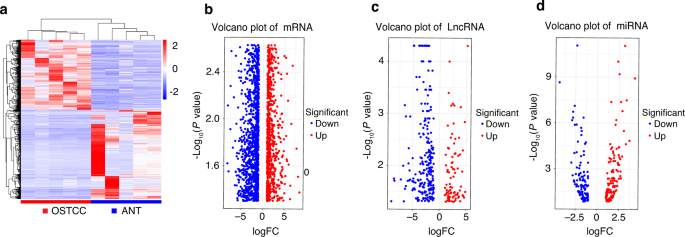
Mutation-associated transcripts reconstruct the prognostic features of oral tongue squamous cell carcinoma

alexandrossfakianakis shared this article with you from Inoreader

41368_2022_210_Fig1_HTML.png

International Journal of Oral Science, Published online: 03 January 2023; doi:10.1038/s41368-022-00210-3

Mutation-associated transcripts reconstruct the prognostic features of oral tongue squamous cell carcinoma
View on Web

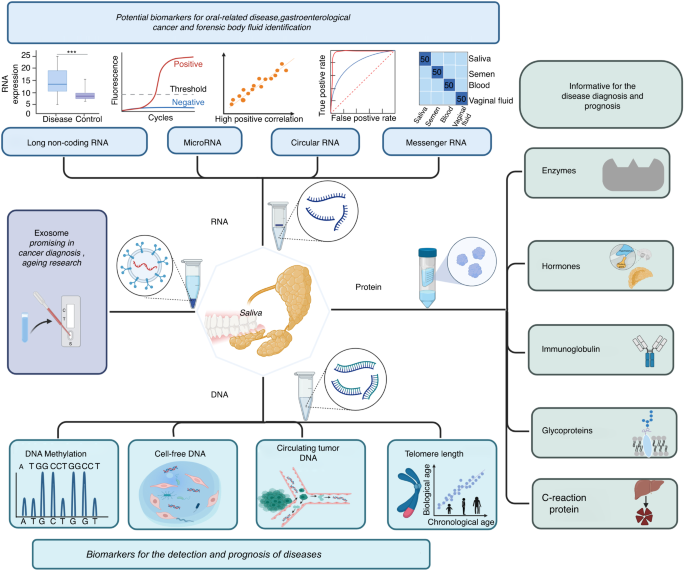
Promising applications of human-derived saliva biomarker testing in clinical diagnostics

alexandrossfakianakis shared this article with you from Inoreader

41368_2022_209_Fig1_HTML.png

International Journal of Oral Science, Published online: 04 January 2023; doi:10.1038/s41368-022-00209-w

Promising applications of human-derived saliva biomarker testing in clinical diagnostics
View on Web

Temporal Trends in Variability of Respirable Dust and Respirable Quartz Concentrations in the European Industrial Minerals Sector

alexandrossfakianakis shared this article with you from Inoreader
Abstract
While between- and within-worker variability have been studied quite extensively, hardly any research is available that examines long-term trends in the variability of occupational exposure. In this first study on trends in occupational exposure variability temporal changes in the variability of respirable dust and respirable quartz concentrations within the European industrial minerals sector were demonstrated. Since 2000 the European Industrial Minerals Association's Dust Monitoring Program (IMA-DMP) has systematically collected respirable dust and respirable quartz measurements. The resulting IMA-DMP occupational exposure database contains at present approximately 40 000 personal full-shift measurements, collected at 177 sites owned by 39 companies, located in 23 European countries. Repeated measurements of workers performing their duties within a specific site-job-campaign combination allowed estimation of within- and between-worker variabi lity in exposure concentrations. Overall day-to-day variability predominated the between-worker variability for both respirable dust concentrations and quartz concentrations. The within-worker variability in concentrations by job was two to three times higher for respirable quartz than for respirable dust. The median between-worker variability in respirable dust concentrations was low and further reduced over time. For quartz concentrations the same phenomenon albeit somewhat less strong was observed. In contrast, for the within-worker variability in concentrations downward and upward temporal trends were apparent for both respirable dust and respirable quartz. The study shows that the (relative) size of temporal variability is large and unpredictable and therefore regular measurement campaigns are needed to ascertain compliance to occupational exposure limit values.
View on Web

Δευτέρα 2 Ιανουαρίου 2023

Small Molecule-mediated Disruption of Ribosome Biogenesis Synergizes With FGFR Inhibitors to Suppress Glioma Cell Growth

alexandrossfakianakis shared this article with you from Inoreader
Abstract
Background
High-grade gliomas are malignant brain tumors characterized by aggressiveness and resistance to chemotherapy. Prognosis remains dismal, highlighting the need to identify novel molecular dependencies and targets. Ribosome biogenesis (RiBi), taking place in the nucleolus, represents a promising target as several cancer types rely on high RiBi rates to sustain proliferation. Publicly available transcriptomics data of glioma patients revealed a positive correlation between RiBi rates and histological grades. We, therefore, hypothesized that glioma cells could be susceptible to RiBi inhibition.
Methods
Transcriptomics data from glioma patients were analyzed for RiBi-related processes. BMH-21, a small molecule inhibitor of RNA polI transcription, was tested in adult and pediatric high-grade glioma cell lines and a zebrafish transplant model. Cellular phenotypes were evaluated by transcriptomics, cell cycle analysis, and vi ability assays. A chemical synergy screen was performed to identify drugs potentiating BMH-21-mediated effects.
Results
BMH-21 reduced glioma cell viability, induced apoptosis, and impaired the growth of transplanted glioma cells in zebrafish. Combining BMH-21 with TMZ potentiated cytotoxic effects. Moreover, BMH-21 synergized with FGFR inhibitor Erdafitinib, a top hit in the chemical synergy screen. RiBi inhibition using BMH-21, POLR1A siRNA, or Actinomycin D revealed engagement of the FGFR-FGF2 pathway. BMH-21 downregulated FGFR1 and SOX2 levels, whereas FGF2 was induced and released from the nucleolus.
Conclusions
This study conceptualizes the implementation of RiBi inhibition as a viable future therapeutic strategy for glioma and reveals an FGFR connection to the cellular response upon RiBi inhibition with potential translational value.

View on Web

Κυριακή 1 Ιανουαρίου 2023

Neurotization of the radial forearm free flap improves swallowing outcomes in hemiglossectomy defects

alexandrossfakianakis shared this article with you from Inoreader

Abstract

Background

We examined the effect of free tissue neurotization on speech and swallowing outcomes for patients undergoing reconstruction of hemiglossectomy defects with a radial forearm free flap (RFFF).

Methods

A retrospective study was performed in patients with oral cavity squamous cell carcinoma undergoing a hemiglossectomy and reconstruction with a RFFF. Functional outcomes including nutritional mode, range of liquids and solids, and speech understandability were analyzed 1-year post-treatment.

Results

Eighty-four patients were included in this analysis, 41 of whom had neurotized flaps (49%). No significant differences in demographic or clinical variables were seen between the neurotized and non-neurotized groups. On multivariate analysis controlling for BMI, flap area, and N-classification, patients with neurotized flaps were significantly more likely to have normal range of liquids and solids and less likely to have a G-tube.

Conclusions

Neurotization of RFFF reconstructing hemiglossectomy defects results in decreased G-tube dependence and improved range of liquids and solids.

View on Web

H‐Type Tracheoesophageal Fistula Cannulation for Rapid Intraoperative Localization

alexandrossfakianakis shared this article with you from Inoreader
H-Type Tracheoesophageal Fistula Cannulation for Rapid Intraoperative Localization

Various techniques for tracheoesophageal fistula cannulation have been reported. In this case, we created a loop using a plastic catheter. The loop allowed us to create traction for rapid intraoperative localization and to pull a difficult-to-reach fistula, superiorly into the neck, to be reached through a cervical approach. Laryngoscope, 2022


View on Web

DSCS, a New Cell Line Developed in vitro From Human Stem Cells of the Apical Papilla

alexandrossfakianakis shared this article with you from Inoreader

Abstract

Aim

To establish and fully characterize a new cell line from human stem cells of the apical papilla (SCAPs) through immortalization with an SV40 large T antigen.

Methodology

Human SCAPs were isolated and transfected with an SV40 large T antigen and treated with puromycin to select the infected population. Expression of human mesenchymal surface markers CD73, CD90 and CD105 was assessed in the new cell line named Dental Stem Cells SV40 (DSCS) by flow cytometry at early and late passages. Cell and proliferation were also analysed. To evaluate trilineage differentiation; quantitative polymerase chain reaction and histological staining were performed.

Results

DSCS cell flow cytometry confirmed expression of mesenchymal surface markers even in late passages (100% positive for CD73 and CD90 and 98.9% for CD105 at passage (P) 25). Fewer than 0.5% were positive for haematopoietic cell markers (CD45 and CD34). DSCS cells also showed increased proliferation when compared with the primary culture after 48 h, with a doubling time of 23.46 h for DSCS cells and 40.31 h for SCAPs, and retained the capacity to grow for >45 passages (150 population doubling) and their spindle shape morphology. Trilineage differentiation potential was confirmed through histochemical staining and gene expression of the chondrogenic markers SOX9 and COL2A1, adipogenic markers CEBPA and LPL, and osteogenic markers COL1A1 and ALPL.

Conclusions

The new cell line derived from human SCAPs has multipotency, retains its morphology and expression of mesenchymal surface markers, and shows higher proliferative capacity even at late passages (P45). DSCS cells can be used for in vitro study of root development and to achieve better understanding of the regenerative mechanisms.

View on Web